
JackBootedThug
MURDERATOR
Moderator
Thing about tube amps…you learn pretty quick what to avoid. This is when I got bit by a pv Windsor….lit my fuckin ass up bwah….
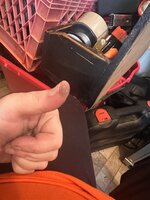
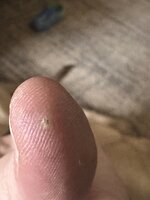


New Avatar always throws me.Thing about tube amps…you learn pretty quick what to avoid. This is when I got bit by a pv Windsor….lit my fuckin ass up bwah….View attachment 449494View attachment 449495

Good info!The Eurotube Pro One probes can be left hooked up while you play.

Good info!
Actually been thinking about replacing my bias probes.
I'm using an old Weber bias-rite, and the instructions specifically tell you not to play the amp with the probes installed, so I came up with my little system for biasing.


Sure, why not post it here? Or maybe we could have a sticky in the Tech Corner?
I made this a long time ago. I had a few amp builders contribute and review final.
Back at a time when I knew very little about amplifiers and certainly nothing about biasing.
I researched stuff online and forumite PMs. Found lots of great info.
Unfortunately, nothing I found was all inclusive like I wanted.
So I created this tutorial for others that were complete noobs like I was. After researching it, doing it, and writing it out, I no longer felt like a noob.
https://splawnfans.proboards.com/thread/7786/amp-biasing-tutorial

Safety? Shit no, we die like men around here!^ That is really good to know and seems like a helluva great feature. I've bought probes from them before but nothing like that. I'm assuming all of their other probes are the regular type. I def blew mine
I doubt @Shreddy Mercury will mind if I put it here, but if not - I can remove. The actual biasing steps I take for MY amp are in the link. It might be a little overkill and certainly not meant to scare anyone but follow some of this and second time you bias an amp will be a hell of a lot less stressful than the first time trust me. There is also a tl;dr version at the end.
***SAFETY Guidelines***
Here are some things to reduce shocking yourself. Filter Capacitors (and traces to them) can store deadly voltages for days on end even after the amp is turned off. In order to bias an amp where the bias trim pot is inside the chassis and accessible from only the underneath you need to be working inside the amp WHILE THE AMP IS TURNED ON. Very Dangerous. If you do not feel comfortable then do yourself a favor and take it in to a qualified amp technician.
-Determine work area in advance and notify others around you to stay away (ie, I didn't want my cats or my kids 'oh cool, what's going on here?'.
-Find a wooden desk, tables, platform as your work space that will more than clear the tubes and transformers while the amp is upside down. I actually recommend measuring the length of the chassis and to get a feel for how much space you'll have on each end and also to clear the tubes and transformers while providing a safe platform. Remember, you'll be pulling tubes upside down with the amp's electronics exposed and facing up. I happened to find the perfect solution by using my 212 cab and another amp as two 'tables'. This provided a nice snug working top to where the amp would not slide off by accident. Brace it right up next to the power transformer. There is not much space between the power transformer and the edge of the amp so you don't want it to slip off. Remember the chassis is fairly heavy. If your amp falls while you are working on it the only thing you should do is step back and safely unplug it. Don't reach for it in these types of situations. It is usually the unexpected things that get people into trouble so having a safe work space is very important. Also make sure you can reach the power, standby, and volume knobs. You will be turning the amp on and off a fair bit. (Sasquatch here on our boards says he stands his upright - which would work too.)
-Wear rubber gloves, but only if they do not impede your work. I actually do not but it is certainly not a bad idea.
-Have good thick regular gloves for pulling tubes and such.
-Wear rubber soled shoes with no steel toe.
-If you have rubber floor mats or the like you can lay those down on the floor as well, especially if you are not on a carpeted area.
-Do not work near other major appliances or old pipes that conduct electricity.
-I also suggest to not drag your feet on the carpet and walk up and touch the amp. Discharge any static electricity on something else first. Anti-static wrist bands are good to if you have them.
-Find, in advance, the smallest flat head screwdriver you can find (1/8") that has a rubber or plastic insulated handle. The type you would use for eyeglasses will work. You will also need a standard phillips too remove the chassis.
-Know in advance what the filter capacitors look like and where they are located.
-Never touch a filter capacitor on the inside of the chassis. There are also traces to these filter capacitors that can be dangerous as well so it is best to keep your hand out.
-You can touch tubes, transformers, etc of the chassis. You can even touch the outside of the capacitors on the outside of the chassis but never the insides. There are 4 good sized cylinders behind the the power tubes on my amp. They are a bit shorter and fatter than a roll of quarters. These are the filter capacitors. Mine are black, they are often blue. Be aware of where they are when you first flip the chassis upside down. Mine has bleeding resistors on them to bleed off deadly voltages but you never know. You can see these resistors attached to the bottom of the capacitor from the underside. When I read mine with a mulitmeter they showed .01 basically but I do not suggest checking yours unless of course you know what you are doing. Just stay away from them. If for example your screwdriver falls over onto the caps or into the amp while the amp is on, DON'T REACH FOR THEM instinctively.Very important to remember. Turn off the amp and remove the screwdriver with wooden tongs and rubber gloves.
-Never disconnect bias probe leads from a multimeter while the amp is on.
-Never put two hands inside an amp at the same time unless you have to.
-One hand on screwdriver One hand in back pocket.
-Don't leave your amp unattended while it is opened up as kids, pets, employees, etc may not know how dangerous this is and want to touch the amp out of curiosity. Put a cardboard box over it and lock the door if you need to leave. Or drain the caps.
-Never play a guitar and touch the inside of the amp at the same time. Set your guitar down to adjust bias. This can be hard to remember as it is easy to want to play guitar and fiddle with bias at the same time without following the steps. Your guitar can make you the middle of a full circuit. Never play your guitar with the bias probe installed.
-Always have a speaker cabinet plugged in. Do not turn your amp head on without a speaker load or load box of some sort.
*If you follow these basic safety procedures you can bias your amp safely and save yourself some money while gaining knowledge and satisfaction.


