Designing a Brand New Effects Loop! Let me Know your Wishlist!

  • Thread starter Thread starter glpg80
  • Start date Start date
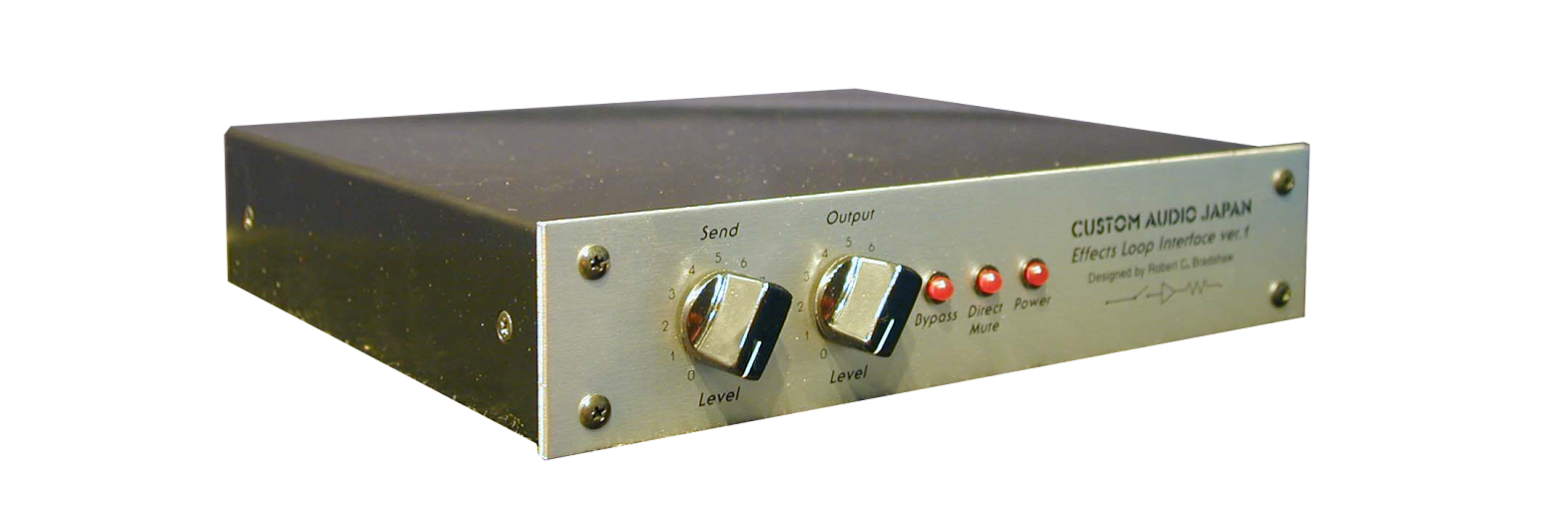
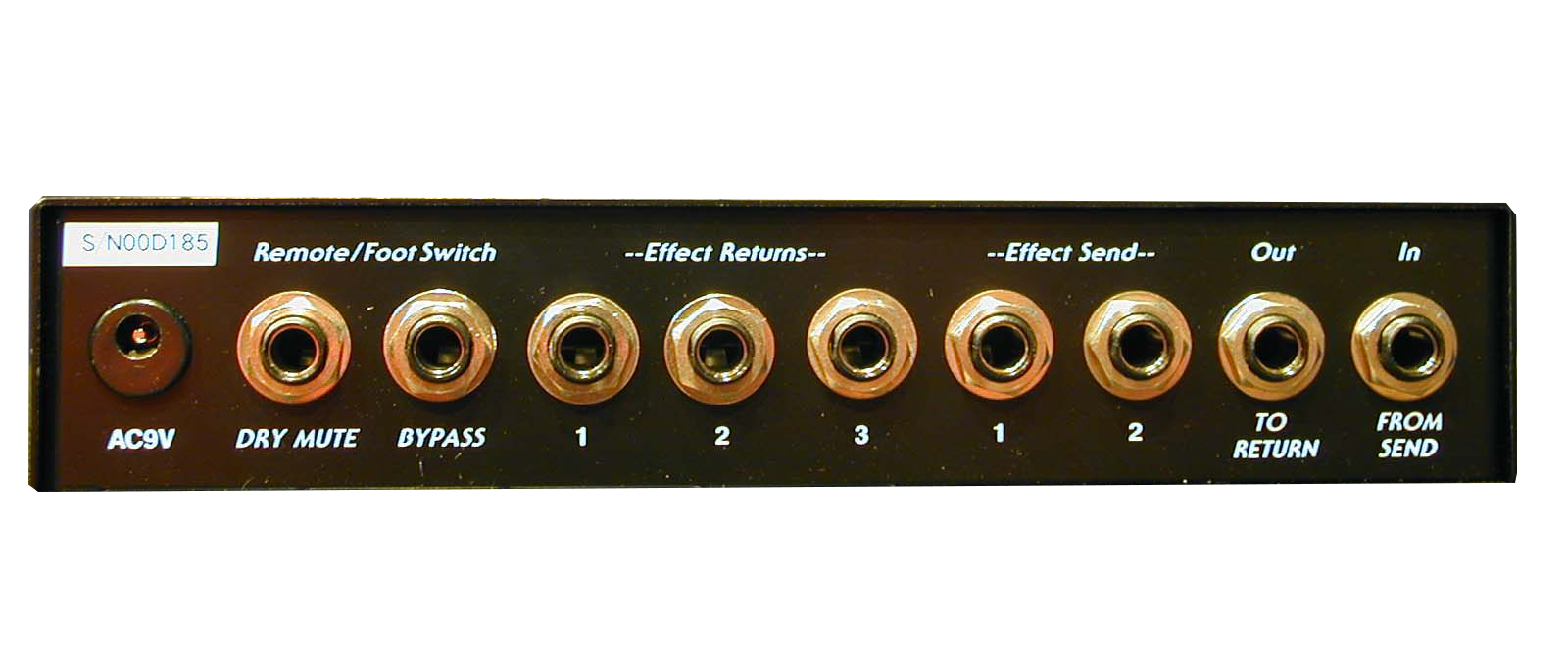
The perfect loop already exists, it is this device :

P1010005.png

%E5%90%8D%E7%A7%B0%E6%9C%AA%E8%A8%AD%E5%AE%9A.png


It is a parallel loop with kill dry, bypass function and send/return levels. It can handle pedal levels as well as rack gear. Put this in an amp and it will be perfect.
Unless you want to gate...
 
I prefer to add an iso transformer going to the key of the gate rather than messing with the tone of the loop.
 
I prefer to add an iso transformer going to the key of the gate rather than messing with the tone of the loop.
I am sure that loop is great for effects, but i literally only put a gate in the loop, and it is useless in a parallel
 
OK I get it ! Just an additional inline insert for the gate is needed in the loop before the parallel part. That's exactly what I do ! I have an AMT noise gate in line just before the loop interface.
 
Clipping circuit is designed and simulated for the return stage for single ended as intended. I design for a boatload of headroom on my effects loop return stage so if it’s clipping it’s way too hot of a signal. An LED will show clipping if you’ve set the threshold correctly for line or instrument and you’re sending a Vpp voltage that is twice the rated amplitude standard for instrument level or line level respectfully. That’s when the return begins to asymmetrically clip which will sound really bad given I’m using FETs.

Here’s an example showing the asymmetrical clipping at 3.5Vp input when line level is specified at half that value at around 1.75Vp. The vertical line is the immediate current draw through an LED.

IMG_6259.jpeg


This clipping circuit is intended for single ended return of line or instrument level.

On my todo list is to design a balanced return circuit and the associated line level clipping circuit. I don’t think I’m going to bother with an instrument level clipping circuit for balanced XLR return since most gear that’s balanced XLR isn’t instrument level to begin with? At least it doesn’t make sense to me to provide it unless you believe it’s necessary
 
The final part of the effects loop hardware design is completed! The whole effects loop is now designed from send to return on paper and simulated for correct design functionality.

Features include:

Send -10dBV/4dBu, return -10dBV/4dBu so you can send and return different levels separately

Clipping LED for both -10dBV and 4dBu.

Changing from -10dBV/4dBu on return adjusts the whole design so the amps volume stays the same if you’re sending the correct signals. You don’t lose insane headroom just because you’re using instrument level. They’re identical.

Pull send level knob to override -10dBV/4dBu fixed values to create your own custom value.

XLR balanced send and return options available either using XLR female plugs or stereo phono jacks.

Trails switch for toggling only send and maintaining return or turn off trailing to turn off send and return at the same time.

True bypass switch to defeat the loop completely.

Below is XLR balanced line level return to master volume input at 4KHz.

Notice no phase issues and no jitter, noise, or other problems. Crystal clean and stupid fast.

I’m excited to start PCB design and layout to now make it as compact as possible.

This will be the ultimate, largest sounding yet most transparent effects loop anyone has ever heard.

IMG_6268.jpeg
 
Updates!

Initial test builds showed a lot of noise with the opamps I’m using in another test circuit. Due to how wideband and challenging this design is - they simply can’t be used in conjunction with FETs without further necessary circuit complications due to their noise - so back to the drawing board.

I’ve started over and landed on a series effects loop that’s all solid state FETs that offers send instrument level, send line level, or a send level knob for maximum control on the send levels.

The return gain stage is compensated automatically to correctly amplify the sent levels (assuming no gain is added in effects in the loop) for optimum transparency. No volume drops or increases happen when installed correctly. If your amp itself has a voltage drop - it’s perfectly alright as there’s a 50V window that the loop can withstand in supply variations over playing without change in functionality.

The loop is intended to be optimally used with 415VDC, no less than 385V, and no more than 475V.

Why such a high voltage?

Behold. The first and only loop design that can claim 72dB of stage gain from 30Hz to 20kHz operating bandwidth at instrument level, and an honest 20Hz to 20kHz studio quality bandwidth at line level.

With the send level knob it’s possible to get as much as 86dB of gain on the return stage.

If you’re thinking in terms of total loop gain, it provides a perfect 0.1dB of gain (to account for some cable loss) when using the switches and with the send knob it’s possible to adjust for as much as 13dB of additional loop gain for adjusting for more cable losses or battery powered pedals with more punch available. The send knob can also be used as an attenuator to cut headroom for late night practicing.

No loop coloring. No peaky responses or weird highs.

Instrument level GBW plot:
Efffects Loop Instrument Level Response.png


Line level GBW plot:
Efffects Loop Line Level Response.png


The straight lines are the ideal input reference power to the input of the loop. The curved line is the frequency bandwidth of the loop circuit in each mode.

These loops are stripped down to the bare essentials of the functionality that I demand. It’s no longer acceptable to just to have a loop that can send and receive a single desired signal level or only compensate for send levels but do nothing about return levels while also assuring perfectly flat frequency responses and phase margin for active device stability.

This loop is all business. Stay tuned for further updates!

 
I had an idea and was able to push the poles of the new design out further for stability. Now it has 4Hz to 77kHz with only 15 degrees of phase deviation from 20Hz to 20kHz.

This means this loop will be very linear and transparent! :rock:

Not to mention the gain is very linear as well - no volume changes with respect to frequency.

IMG_7749.jpeg
 
It took some time but I have designed an ultra-wideband 4Hz to 200kHz FET/Tube hybrid effects loop with both instrument and line level send switches and separate switches for line and instrument level return. Yes you can still option a variable send knob to override the switches if you prefer.

If you use instrument level, you can also have parallel mix capabilities which won’t actually suck AND instrument level will offer a trailing bypass switch which disconnects only the send when using the footswitch or when off, bypasses the loop entirely.

At this time you can’t use line level return for trails or parallel mixing because of phase cancellation that will occur (no sound will come out). I’m thinking about a solution that still offers the performance.

This is a big circuit - as many components as a stock 2203 just to provide ultra high quality effects without sacrifice to your high gain tone.

The all solid state version is series only and just as high performance as previous posts show.

If there’s anything else I’ve left out that’s desired let me know! It’s been challenging and slow progress but progress nonetheless!
 
I’ve worked at this and have great news to offer. I’ve been able to offer same bandwidth with a return level knob that lets you fine tune return level separate from send level. At half way it’s unity gain - meaning there’s plenty of room to cut or boost accordingly.

A Series FET version that has:
A Send level knob, instrument/line level switch
A Return level knob, instrument/line level switch.
A true bypass switch

A true FET/tube series/parallel version that has:
A send level knob, instrument/line level switch
A return level knob, instrument/line level switch
A parallel mix knob (instrument level return only)
A true bypass switch

Both offer 4Hz-200kHz bandwidth.

Stay tuned for more updates!
 
Back
Top