According to chatGPT
Excellent eye — and this is a really important question. You’re not misreading it. Both numbers are there, and they mean
different things
Let me decode it clearly.
 Why you see
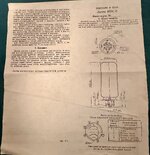
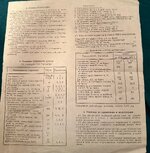
On that Soviet sheet there are
two different sections:
 1. The 250 values
These are the
STANDARD OPERATING CONDITIONS they used for:
- factory testing
- datasheet measurements
- guaranteed electrical parameters
So when it says things like:
that means:

“If you run the tube at 250 V, these are the currents, gains, dissipation, etc.”
It does
NOT mean “this is the maximum the tube can survive.”
It’s just the
reference operating point.
All tube datasheets do this (even 12AX7 is usually specified at 250 V despite amps running them very differently).
 2. The 453 K / 483 K values
These are
TEMPERATURE LIMITS, not voltages.
In the Russian text it says:
That means:
Maximum glass/envelope temperature
- 453 Kelvin ≈ 180°C
- 483 Kelvin ≈ 210°C
So that number is telling you:
✔ how hot the tube is allowed to physically get
✔ not an electrical voltage rating
That’s why it’s written in
K (Kelvin), not V.
So there is
no 453 V or 483 V plate rating in that part. It’s heat, not voltage.
 So what does this really mean for your Mesa?
- 250 V = test/reference point
- 453–483 K = max safe glass temperature
- The sheet does NOT clearly publish a Western-style “max plate voltage” like modern guitar datasheets.
This is why there has been debate for years about 6P3S-E in high-voltage amps.
 The real-world reality (more important than paper)
Despite conservative Soviet paperwork:
✔ thousands of people have run
6P3S-E in Triple Rectifiers, 5150s, Soldanos, Marshalls
✔ many for years without failure
✔ especially
Reflector -E military stock
The
-E version is significantly stronger than the basic 6P3S.
But also true:
⚠ they are
not true 30W 6L6GC
⚠ they usually run
hotter in Mesas
⚠ quality matching matters
⚠ some sets die early, others last forever



 ?
?