Mesa 4x12 Wiring: Before and After

lol I hope you're joking
I did 10 ga. like Bogner. Just gotta use a 40 watt iron.

I find it odd you noticed not difference as the difference is stark in my experience. All good either way.

Which wiring diagram did you use? Aiken?
 
I did 10 ga. like Bogner. Just gotta use a 40 watt iron.

I find it odd you noticed not difference as the difference is stark in my experience. All good either way.

Which wiring diagram did you use? Aiken?

I see no reason why there would be a difference between 10, 12, 14, 16, or even 18 AWG. All of those gauges can easily handle the signal in a speaker cab. The wire in the speaker itself is tiny. The wire inside the amp is also 18/20/22 AWG. If you have a long run from amp to cab, then sure... use thicker wire. But the 14 AWG I used inside the cab is perfectly fine.

My Bogner cabs have that huge 10 AWG stuff and it's a pain in the ass to work with. But I keep it in there just because.

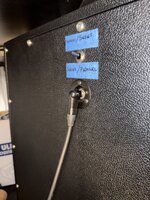
As far as wiring, you should be able to see what I did in the photo.
 
I see no reason why there would be a difference between 10, 12, 14, 16, or even 18 AWG. All of those gauges can easily handle the signal in a speaker cab. The wire in the speaker itself is tiny. The wire inside the amp is also 18/20/22 AWG. If you have a long run from amp to cab, then sure... use thicker wire. But the 14 AWG I used inside the cab is perfectly fine.

My Bogner cabs have that huge 10 AWG stuff and it's a pain in the ass to work with. But I keep it in there just because.

As far as wiring, you should be able to see what I did in the photo.
I think at a certain demarcation you reach a point of diminishing returns as the gauge wire gets bigger regarding speaker wiring in cabinets.
 
I think at a certain demarcation you reach a point of diminishing returns as the gauge wire gets bigger regarding speaker wiring in cabinets.

Agreed. I think 14 AWG is a nice middle ground.
 
Last edited:
I see no reason why there would be a difference between 10, 12, 14, 16, or even 18 AWG. All of those gauges can easily handle the signal in a speaker cab. The wire in the speaker itself is tiny. The wire inside the amp is also 18/20/22 AWG. If you have a long run from amp to cab, then sure... use thicker wire. But the 14 AWG I used inside the cab is perfectly fine.

My Bogner cabs have that huge 10 AWG stuff and it's a pain in the ass to work with. But I keep it in there just because.

As far as wiring, you should be able to see what I did in the photo.
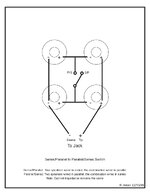
Yup that's Aiken. If you want to hear the same speakers/cab you can add one extra wire with a switch on it to go back and forth.

As far as the wire, yeah, I suppose bigger doesn't techincally mean better but I sure can tell Marshall Soundrunner 238 strand OFC from my other speaker cables and wire. It's just more of everything, more open.

Reinhold is certainly extravagant and eccentric, but he's right about that wire.

I'd really hoped this would have been a more inspiring experience for you. Sorry it didn't leave the same night/day impression, this sucks.
 
Thanks for doing the test. My Hiwatt cab was rewired before I got it with huge car stereo wire. Front loaed cab and I didn’t want to deal with it, so just put the soeaker back in. I need to take that out one of these days.
 
I sure can tell Marshall Soundrunner 238 strand OFC from my other speaker cables and wire. It's just more of everything, more open.

You're saying you can hear the difference between two brands of speaker wire?
 
In my experience with guitar cabs/speakers, going too big of a wire is often either:
A: overkill
B: counterproductive and/or brings more adverse effect than anything else

I have examples for case B, where for instance:
- the smaller wire (about 18-19 AWG) is part of what makes some older vintage cabs sound the way they sound
- going with a too big cable makes soldering more difficult and bring risks to damage some connectors/speaker terminals
I have never had problem soldering the wire. The only time I had broken connections was the solidcore 14 gauge wiring that was originally in my mills. I always rewire my cabs to mono if they aren't already.
 
lol I hope you're joking
Not at all. I read that 12 gauge and bigger is best for cabs. I had always just used 18 gauge. I changed it to 12, but i never did a before and after. The article I was reading said that the 12 and lower brings more punch. I figured it was an easy change, so i might as well try it.

I can't find the pic with the redbacks in it, but this is when I originally did it.
2011.jpg
 
How are you switching the cabs? If you’re stopping to unplug one and physically switch the speaker cable, you may not be hearing the difference. You need switch or a cab switcher.

I have a parallel/ series and series/ parallel switch on my workshop cab. I can absolutely hear a difference. It is not subtle at all.

One side of the switch has more low end. The other is tighter. I forget which is which. I just know I liked parallel/ series better.

I’d like to start offering cabs eventually. If I do, I’ll most likely add this switch. I don’t know of anyone else who does. And it’s useful.
 

Attachments

  • IMG_5750.jpeg
    IMG_5750.jpeg
    1.9 MB · Views: 12
  • IMG_5751.jpeg
    IMG_5751.jpeg
    95.1 KB · Views: 12
How are you switching the cabs? If you’re stopping to unplug one and physically switch the speaker cable, you may not be hearing the difference. You need switch or a cab switcher.

I have a parallel/ series and series/ parallel switch on my workshop cab. I can absolutely hear a difference. It is not subtle at all.

One side of the switch has more low end. The other is tighter. I forget which is which. I just know I liked parallel/ series better.

I’d like to start offering cabs eventually. If I do, I’ll most likely add this switch. I don’t know of anyone else who does. And it’s useful.
This is the way. They also react differently at volume, so it is a dynamics mod as much as it is tone.

Let’s not quit this thread until our bro gets some value and vibes out of this experiment.
 
Sorry guys, I'm gonna bow out until I've trained my ears to hear the difference between 12 AWG and 14 AWG wire.
 
I don’t claim to hear the difference in speaker wire gauge. But I do hear the difference in parallel/ series vs series/ parallel.
 
Not at all. I read that 12 gauge and bigger is best for cabs. I had always just used 18 gauge. I changed it to 12, but i never did a before and after. The article I was reading said that the 12 and lower brings more punch. I figured it was an easy change, so i might as well try it.

I can't find the pic with the redbacks in it, but this is when I originally did it.
View attachment 447164
Isn't there no mechanical connection with wires that thick unless you were to use spade connectors? If I remember correctly, 16 gauge was as big as I could easily fit through the speaker terminals. Joints on big vibrating parts seem like the last place I'd want to trust solder to hold forever considering they could blow up a transformer if they failed.
 
Isn't there no mechanical connection with wires that thick unless you were to use spade connectors? If I remember correctly, 16 gauge was as big as I could easily fit through the speaker terminals. Joints on big vibrating parts seem like the last place I'd want to trust solder to hold forever considering they could blow up a transformer if they failed.
Would probably be a bad thing, but I would trust a solder joint to hold better than a connector
 
I don’t claim to hear the difference in speaker wire gauge. But I do hear the difference in parallel/ series vs series/ parallel.
I had this ser/par switch on old VHT cab and differences were as You stated before. Subtle but You can hear one is tighter and little less low end to another one position.
 
Back
Top