
skoora
Well-known member
Well somebody wanted a comparison. 1 is the 100, 2 is the 20

Good point. I do think there is something with this one that separates it from a lot of the other smaller watt amps that have been released. I think this is the first small amp head that does that Jose tone and has a lot more gain, etc. I had the JJ Jr. and Pink Taco V2 and both were great and had a great amount of gain but didn't get t9 this level.That and the way inflation has permeated the music gear market: knocking on the door of $2 grand for a 20 watt mini amp??? Not saying its 'over priced' but I guess EVERYTHING is 'over-priced' these days.

Well somebody wanted a comparison. 1 is the 100, 2 is the 20

I actually think its possible he makes more off of the amount of synergy modules he sells than amps, just because of how cheap and accessible the modules areGood point. I do think there is something with this one that separates it from a lot of the other smaller watt amps that have been released. I think this is the first small amp head that does that Jose tone and has a lot more gain, etc. I had the JJ Jr. and Pink Taco V2 and both were great and had a great amount of gain but didn't get t9 this level.
Now if Dave makes a Synergy Jose module, I'll shit Tiffany cufflinks.....
Yep and as others have mentioned, it becomes apparent when you crank it. At low volumes I don't notice a huge difference but when I'd crank my JJ Jr., the el84s would not sound as full.For computer recording guys the 20 is just fine but nothing but a 100 watt sounds like a 100 watt.
At low volumes you are just getting the sound of the preamp.Yep and as others have mentioned, it becomes apparent when you crank it. At low volumes I don't notice a huge difference but when I'd crank my JJ Jr., the el84s would not sound as full.

El84 amps are great amps but they can't duplicate yhe sound of EL34 or 6L6 amps for metal. I take that back, for specific metal. I used my el84 Synergy 20IR for five of our songs in the studio and then used the Fryette 6l6 PS2 and same Synergy preamp (SLO-II) and you can hear the difference. The el84 is brighter, high mid focused and less low end. Now granted, I was using the bigger power amp so there are a lot of pieces to this.I'm not going to lie, I'm excited about this circuit being available in a cheap, light weight option. However, I need to actually play it and listen to see if it's going to be the first EL84 amp that I love. EL34s have always been my preferred power tone.
The only thing I would add to that is... feels and punches like a 100 watt amp.For computer recording guys the 20 is just fine but nothing but a 100 watt sounds like a 100 watt.

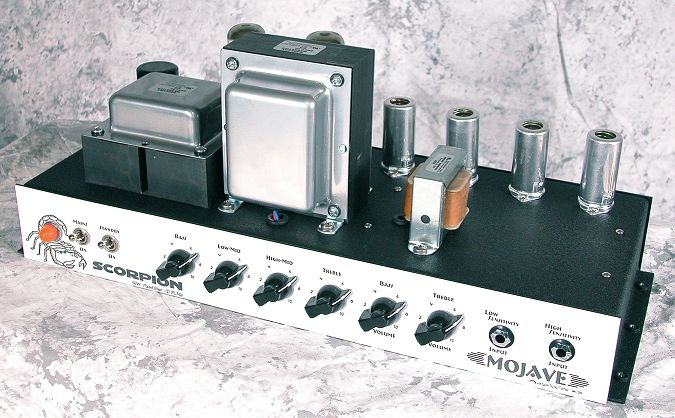 The Scorpion has components mounted on a turret board, wired up very cleanly in an all point-to-point fashion. To many amp and tone purists, this style of build is the best method to use even though it is much more labor and time-intensive. It’s how most tube amplifiers were built in the ’50s and ’60s and is virtually non-existent today as far as mass-production name brands are concerned.
The first time I played a 50 watt that punched like a 100 watt was when i was shooting out my 100 watt w800 with @RedB4Black 's 50 watt W800.The only thing I would add to that is... feels and punches like a 100 watt amp.
I have played many low wattage amps, and I even built a nice 5 watt single ended Class A EL34 Marshall 2203/2204 amp and while it sound damn good for a smaller amp, it does not punch, feel or have all the dynamics of a 50 or 100 watt amp. Now I've heard Friedman did seem to make the little 20 watters punch harder but aside from using 50 watt output transformers in them a 20 watt amp will never punch like a 50 watt amp let alone a 100 watt amp. It really comes down to physics having to do with the output transformer.
I know I've posted this before but Vic at Mojave amps built his 50 watt Scorpion with a 100 watt output transformer so it did hit like a 100 watt amp yet was 50 watts. It's really akin to pulling two tubes from a 100 watt amp. When I pull two tubes from my 68 100 watt plexi it still hits the same but at less volume but yet my 72 50 watt Marshall still hits and feels smaller by comparison. I'm sure as smart is Dave Friedman is I'm sure he knows all this and he does mention big transformers in his 20 amp so it's possible he is using 50 watt iron in the 20 watters like Victor did at Mojave. I've looked around and found a 25/50 watt output transformer for my little 5 watt single ended class A Marshall to replace the little Hammond I have in there now......so many projects....so little time.
Pull two tubes from your 100 watter and play it side by side with your real 50 watt amp with a 50 watt output transformer and you will find the 50 watter does not punch or have the dynamics of the 100 watter with two tubes pulled, I'm not shitting on smaller low wattage amps by any means but the difference is tangible and real if you are honest.
https://legendarytones.com/mojave-ampworks-scorpion/
Design and Construction
The Scorpion has components mounted on a turret board, wired up very cleanly in an all point-to-point fashion. To many amp and tone purists, this style of build is the best method to use even though it is much more labor and time-intensive. It’s how most tube amplifiers were built in the ’50s and ’60s and is virtually non-existent today as far as mass-production name brands are concerned.
The transformers and choke are custom-specified and built Mercury Magnetics units. The output transformer in particular is of interest. It’s a larger unit that would be seen more often in 100 watt models. Victor Mason states that there was more to this integration than simply taking a 100 watt specified output transformer and using it for the Scorpion’s 50 watt design.

Daves EL84 circuit doesn’t sound like your typical oneI'm not going to lie, I'm excited about this circuit being available in a cheap, light weight option. However, I need to actually play it and listen to see if it's going to be the first EL84 amp that I love. EL34s have always been my preferred power tone.
Dave's going to sell more of the 20 watters in todays market and he knows that as he is quite tuned in with the modern market.I agree, it should have been a 50 watt.

Well somebody wanted a comparison. 1 is the 100, 2 is the 20

Well somebody wanted a comparison. 1 is the 100, 2 is the 20

Fo' sho!however i’d argue that you could reclaim some of that oomph with a nice 4x12 with vintage celestions or even better running a W/D rig with a wet power amp that balances the lows back in.

The only thing I would add to that is... feels and punches like a 100 watt amp.
I have played many low wattage amps, and I even built a nice 5 watt single ended Class A EL34 Marshall 2203/2204 amp and while it sounds damn good for a smaller amp, it does not punch, feel or have all the dynamics of a 50 or 100 watt amp. Now I've heard Friedman did seem to make the little 20 watters punch harder but aside from using 50 watt output transformers in them a 20 watt amp will never punch like a 50 watt amp let alone a 100 watt amp. It really comes down to physics having to do with the output transformer.
I know I've posted this before but Vic at Mojave amps built his 50 watt Scorpion with a 100 watt output transformer so it did hit like a 100 watt amp yet was 50 watts. It's really akin to pulling two tubes from a 100 watt amp. When I pull two tubes from my 68 100 watt plexi it still hits the same but at less volume but yet my 72 50 watt Marshall still hits and feels smaller by comparison. I'm sure as smart as Dave Friedman is I'm sure he knows all this and he does mention big transformers in his 20 amp so it's possible he is using 50 watt iron in the 20 watters like Victor did at Mojave. I've looked around and found a 25/50 watt output transformer for my little 5 watt single ended class A Marshall to replace the little Hammond I have in there now......so many projects....so little time.
Pull two tubes from your 100 watter and play it side by side with your real 50 watt amp with a 50 watt output transformer and you will find the 50 watter does not punch or have the dynamics of the 100 watter with two tubes pulled, I'm not shitting on smaller low wattage amps by any means but the difference is tangible and real if you are honest.
https://legendarytones.com/mojave-ampworks-scorpion/
Design and Construction
The transformers and choke are custom-specified and built Mercury Magnetics units. The output transformer in particular is of interest. It’s a larger unit that would be seen more often in 100 watt models. Victor Mason states that there was more to this integration than simply taking a 100 watt specified output transformer and using it for the Scorpion’s 50 watt design.

Both sound really, really cool - but even through the speakers on my tablet, you can just hear that extra layer of meat in the 100 watt.Well somebody wanted a comparison. 1 is the 100, 2 is the 20
To me the difference is so slight I’d be perfectly happy with the 20 watt for recording and jamming at home. If I was in a band though, definitely the hundred for the headroom. It’s not quite a sound for me (little too stringy?) in the demos I’ve heard so far, even though I love Marshall tones so I can happily leave the heart wrenching decision to othersBoth sound really, really cool - but even through the speakers on my tablet, you can just hear that extra layer of meat in the 100 watt.

Yes, but that extra meat also brings in 'sonic real estate' when recording, where it's borderline woofy.Both sound really, really cool - but even through the speakers on my tablet, you can just hear that extra layer of meat in the 100 watt.


